PREVENTIVE DENTAL PROCEDURES

Post and Core Build-Up: Structural Foundation for Weakened Teeth

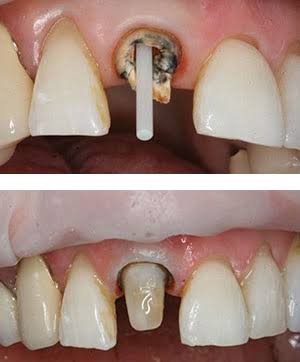
When extensive decay or fracture leaves little tooth structure above the gumline, a fiber post and core provides the mechanical anchor needed to securely support a long-lasting crown.

WhatsApp Us Call Us
20+ Years Trusted Care Digital 3D Accuracy Sarvodaya Enclave, South Delhi
TOOTH RECONSTRUCTION Post and core dental restoration
Non-Corrosive Fiber PostHigh-Elasticity Core ResinMaximum Retention
AS
Dr. Amit Srivastava (BDS, MDS Orthodontics) 29+ Years Clinical Practice • Sarvodaya Enclave
Clinical Deep-Dive

Engineered Tooth Anchoring: Why Fiber Posts Protect Your Roots

Following successful root canal treatment, a tooth that has suffered extensive damage may lack adequate coronal height to grip a crown securely. For a crown to stay firmly in place, it requires a solid core of tooth structure measuring at least 2mm in height (the 'ferrule effect').

At Dental Specialities, we utilize advanced translucent glass-fiber posts bonded with dual-cured adhesive resin cement. Unlike outdated cast metal posts that were rigid and acted like wedges inside roots (often leading to catastrophic vertical root fractures), fiber posts have a modulus of elasticity almost identical to natural human dentin.

This natural flexural property dissipates chewing forces harmoniously along the root, preventing stress concentration while providing an unshakeable composite core for your final zirconia or ceramic crown.

Why Choose This Care

Key Benefits & Clinical Advantages

Prevents Root Fractures

Fiber posts mimic natural dentin elasticity, absorbing occlusal shock rather than splitting roots.

Superior Esthetics

Translucent glass-fiber allows natural light transmission without grey shadows under all-ceramic crowns.

Chemical Micromechanical Bond

Adhesive resin cements bond the post directly to root canal walls, creating a monoblock unit.

Zero Corrosion or Tattooing

Metal-free, preventing metallic corrosion and black oxidation lines at the gumline.

Fast Single-Visit Completion

Can be performed immediately following root canal completion or in one 40-minute appointment.

Solid Grip for Long-Lasting Crowns

Rebuilds ideal geometric retention so your new crown stays permanently seated.

Candidate Suitability

Is This Treatment Right for You?

A comprehensive examination and digital scan confirms suitability. Here is our clinical guideline.

When This Treatment Is Recommended

  • Root canal treated teeth with more than 50% loss of natural crown structure
  • Front teeth with fractured crowns where root remains healthy and well-obturated
  • Teeth where previous old crowns have detached due to core fracture
  • Premolars and molars requiring extra vertical stabilization before bridge placement

When An Alternative May Be Indicated

  • Teeth with vertical root fractures (Extraction indicated)
  • Teeth with severe gum disease and insufficient bone support along root
  • Teeth that still retain sufficient natural enamel wall height (>2mm 360-degree ferrule)
How It Works

Step-by-Step Clinical Process

Transparent, predictable steps so you feel fully informed and confident at every stage.

01

Root Canal Space Preparation

Precise calibration of the post space using depth-controlled endodontic drills, preserving apical seal.

02

Fiber Post Sizing & Silanization

Selecting the anatomically matched fiber post and treating its surface with silane for maximum bond.

03

Adhesive Resin Luting

Dual-cure adhesive cementation anchoring the post securely into the prepared root canal space.

04

Core Sculpture & Crown Prep

Sculpting the high-density composite core build-up and preparing ideal margin margins for crown impression.

How we plan your care

A clear process from consultation to review.

We use clinical assessment and digital planning to discuss the appropriate treatment—not patient result imagery.

1

Consult

We listen to your concerns and assess your oral health.

2

3D scan

iTero or CBCT imaging is used when it helps plan your care.

3

Digital plan

We explain appropriate options, stages and your treatment estimate.

4

Treatment & review

Care is monitored with planned check-ins and follow-up guidance.

Patient Inquiries

Frequently Asked Questions

Clear, clinically honest answers to the questions our patients ask most often.

Does placing a post and core hurt?+

No, because the tooth has already undergone root canal therapy, the nerve is no longer present. The procedure is entirely comfortable and comfortable.

Is a fiber post better than a metal post?+

Yes. Fiber posts are vastly superior because their flexibility matches natural tooth structure, preventing root fractures. They are also tooth-colored, so no gray metallic tint shows through your crown.

Can a post be placed without doing a root canal?+

No. A post can only be anchored inside the root canal space of a tooth that has been properly treated and sealed with a root canal.

How long will the post and core last?+

When bonded properly and shielded with a well-fitting crown, a post and core will typically last as long as the tooth root itself—frequently 15 to 20+ years.

What happens after the post and core is placed?+

Once the core is shaped, we take an iTero 3D digital scan to fabricate your permanent crown. A temporary crown protects the tooth while your final crown is crafted.